Particle Physics And Standard Model
Understanding physics is all linked together where when someone tries to understand particle physics they should have known about electromagnetism and electrical and one of the key factors why I had delved into physics of many topics at once.
Particle physics refers to particles which present at the micro-level where it needs Electron microscopes as primary tools to visualize particles at the microscopic and even atomic level. They use a beam of electrons instead of light to illuminate the specimen, allowing for much higher resolution than traditional light microscopes.

Electron microscope

Working principle of transmission electron microscopy (TEM)

Transmission Electron Microscopy

Transmission electron microscopy (TEM)
It's a quantitative method to determine the particle size, shape and distribution. TEM is also an electronic spectroscopic imaging technique but has a higher resolution than SEM.
1. Electron Beam GenerationElectron Gun: A high-voltage electron gun accelerates electrons to high speeds, creating a focused beam.
2. Specimen PreparationThin Sectioning: The sample is prepared as a very thin slice (often less than 100 nanometers thick) to allow electrons to pass through.
Embedding: The sample may be embedded in a resin to support its structure during sectioning.
3. Interaction with the SpecimenElectron Scattering: As the electron beam passes through the specimen, some electrons are scattered by the atoms in the material.
Contrast: The scattering pattern depends on the density and atomic number of the atoms, creating contrast in the image.
4. ImagingMagnetic Lenses: A series of magnetic lenses focuses the scattered electrons onto a detector.
Image Formation: The detector records the intensity of the electrons at each point, forming an image.
5. AnalysisImage Interpretation: Scientists analyze the image to determine the structure, composition, and properties of the material.
6. Quantitative Analysis: TEM can be used for quantitative measurements, such as particle size distribution and crystal structure.

Particle
In the physical sciences, a particle (or corpuscule in older texts) is a small localized object which can be described by several physical or chemical properties, such as volume, density, or mass. They vary greatly in size or quantity, from subatomic particles like the electron,

Hydrogen atomic orbitals at different energy levels. The more opaque areas are where one is most likely to find an electron at any given time.
From microscopic particles like atoms and molecules to macroscopic particles like powders and other granular materials. Particles can also be used to create scientific models of even larger objects depending on their density, such as humans moving in a crowd or celestial bodies in motion.
The term particle is rather general in meaning and is refined as needed by various scientific fields. Anything that is composed of particles may be referred to as being particulate. However, the noun particulate is most frequently used to refer to pollutants in the Earth's atmosphere, which are a suspension of unconnected particles, rather than a connected particle aggregation. It provides a comprehensive classification of all known elementary particles.
The Standard Model of particle physics is a foundational framework that elegantly describes three of the four fundamental forces governing the universe: electromagnetism, the weak force, and the strong force.
Electromagnetism: Range: Long-range force
Particles: Acts on charged particles (e.g., protons, electrons)
Effects: Responsible for electricity, magnetism, light, and chemical reactions.
Particles: Acts on charged particles (e.g., protons, electrons)
Effects: Responsible for electricity, magnetism, light, and chemical reactions.
Weak Force:Range: Short-range force
Particles: Acts on quarks and leptons (e.g., electrons, neutrinos)
Effects: Responsible for radioactive decay and the conversion of particles into other particles.
Strong Force:Range: Very short-range force
Particles: Holds quarks together to form protons and neutrons
Effects: Responsible for the stability of atomic nuclei.
These forces are described by different theories: Electromagnetism is described by Maxwell's equations.
Weak Force: Described by the electroweak theory, which unifies the weak force and electromagnetism.
Strong Force: Described by quantum chromodynamics (QCD).
Elementary table of particle

The term "particle" is usually applied differently to three classes of sizes. The term macroscopic particle usually refers to particles much larger than atoms and molecules. These are usually abstracted as point-like particles, even though they have volumes, shapes, structures, etc. Examples of macroscopic particles would include powder, dust, sand, pieces of debris during a car accident, or even objects as big as the stars of a galaxy.
The Standard Model
The Standard Model of particle physics is the theory describing three of the four known fundamental forces (electromagnetic, weak and strong interactions – excluding gravity) in the universe and classifying all known elementary particles. It was developed in stages throughout the latter half of the 20th century, through the work of many scientists worldwide, with the current formulation being finalized in the mid-1970s upon experimental confirmation of the existence of quarks. Since then, proof of the top quark (1995), the tau neutrino (2000), and the Higgs boson (2012) have added further credence to the Standard Model. In addition, the Standard Model has predicted various properties of weak neutral currents and the W and Z bosons with great accuracy.

What does the electron look like?
An electron looks like a particle when it interacts with other objects in certain ways (such as in high-speed collisions). When an electron looks more like a particle it has no shape, according to the Standard Model. Electrons don't have physical shapes they act as particle duality refers to their behaviour in different situations, not their physical appearance.

Probability densities for the first few hydrogen atom orbitals, seen in cross-section. The energy level of a bound electron determines the orbital it occupies, and the colour reflects the probability of finding the electron at a given position.

Maxwell's equations of electromagnetism
Maxwell's equations are a set of four equations that describe the behaviour of electric and magnetic fields and how they relate to each other. Ultimately they demonstrate that electric and magnetic fields are two manifestations of the same phenomenon.
In a vacuum with no charge or current, Maxwell's equations are, in differential form:
Where E and B are the electric field and magnetic flux density, and ∇· and ∇× are the divergence and curl operators, respectively. The variables µ0 and ε0 are the fundamental universal constants called the permeability of free space and the permittivity of free space, respectively. In a vacuum with no electrical charges present, the mathematical solutions to these differential equations are sinusoidal plane waves, with the electric field and magnetic fields perpendicular to each other and to the direction of travel, having a velocity

where c is recognized as the speed of light.
Maxwell's equations are macroscopic expressions; they apply to the average fields and do not include quantum effects.
Maxwell's Equations: General Form
In their most general form, Maxwell's equations can be written as:
In the first equation, ρ is the free electric charge density. In the last equation, J is the free current density.
For linear materials, the relationships between E, D, B, and H are
D = εE
B = µH
Here, ε is the electrical permittivity, and µ is the magnetic permeability. For nonlinear materials, e and µ are dependent on the field strength. In isotropic media, e and µ are independent of position. In nonisotropic media, e and µ can be described as 3×3 matrices that represent the different values of permittivity and permeability along the different spatial axes of the medium. In all media, e and µ also vary with the frequency of the radiation.
To be consistent with Maxwell's equations, the magnitudes of the electric and magnetic field vectors must satisfy the following relationship:

Thus, in electromagnetic radiation, the electric field vector has a much larger amplitude than the magnetic field vector.
Understanding equations as such is irrational to understand the functions of square root.
The square root of a number is the value of power 1/2 of that number. In other words, it is the number whose product by itself gives the original number. It is represented using the symbol '√ '.
How does a diode filter electrons? Analysing this will make a fundamental understanding the behaviour of the electron. This analogy delves an explainable nature principle of an Electron.

Today, most diodes are made of silicon, but other semiconducting materials such as gallium arsenide and germanium are also used.

How do electrons act in Semiconductor materials such as Silicon? As We Already Know Electron Act differently on Types Of Material "Conductivity"
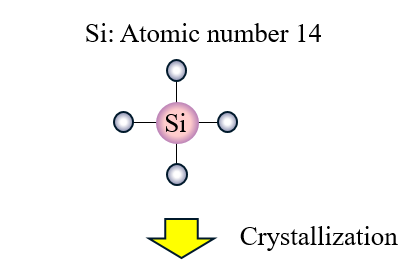
A silicon atom has 14 electrons around the nucleus, and of these, there are 4 valence electrons on the outermost orbital. When this is made into a single crystal, it can be used as a material for semiconductor products.
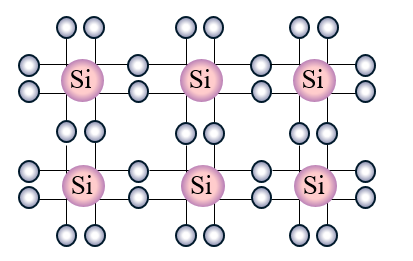
When it crystalizes, the nuclei share electrons and they bond with 8 electrons around each nucleus. Electricity for the most part does not conduct in this pure monocrystalline silicon state. Doping silicon with other impurities changes it so it is conductive. The semiconductor is categorized as a p-type or n-type depending on the type of impurities that are doped. Junctions based on the p-types and n-types are integrated into one chip to use as an electronic component. p-type semiconductor and n-type semiconductor
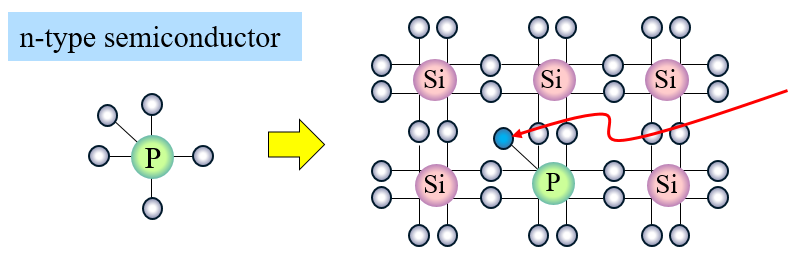
This electron is “extra” in this structure. This is a free electron. When voltage is applied, it changes to a state where the electron is drawn to the positive (+) and can move freely (current flows).
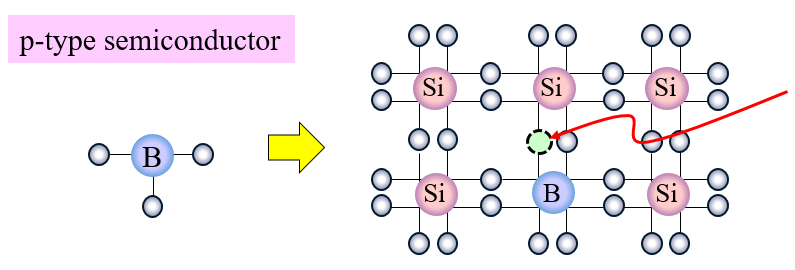
Here, this state leaves a “vacancy” where there is no electron. This vacancy is called a hole. That is, the hole can also be called a virtual particle because it is void. How current flows in p-type semiconductors
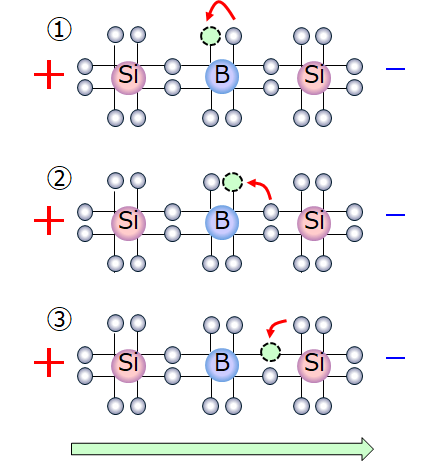
Movement of electrons and holes in semiconductor
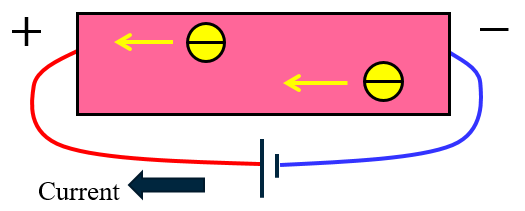
Electrons move toward the plus pole. At this time, the current flows in the opposite direction of the electrons’ movement.
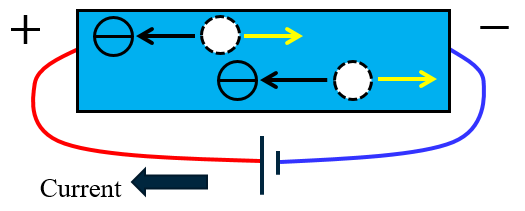
Electrons are what is actually moving, but the holes appear to be moving toward the direction of the minus pole.
As a result, both p-type and n-type semiconductors can have current flow, but they are not as conductive as metal. Therefore, there is no need to use semiconductors if the only purpose is for current flow or conductivity. The advantages or characteristics of a semiconductor are its ability to allow or stop current flow based on certain conditions. The basic principle behind a semiconductor is its rectification behaviour using a p-n junction. When voltage is applied in the forward direction of the p-n junction
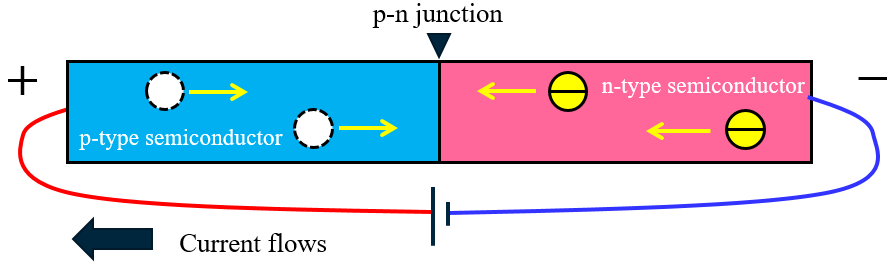
When voltage is applied to the p-n junction so that p becomes plus, the holes and the electrons can be moved toward the interface. When holes and electrons meet at the interface (junction), the electrons jump into holes and both are eliminated. After those electrons are eliminated, more electrons flow into the n-layer, and electrons flow out from the p-layer, creating new holes. This is repeated, enabling the current to continue to flow. When voltage is applied in the reverse direction of the p-n junction
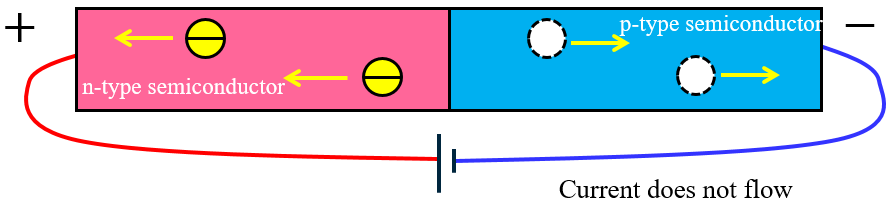
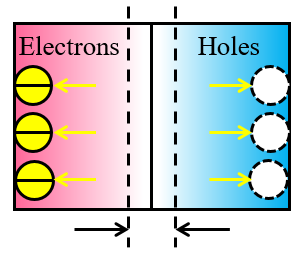
Voltage is applied to the p-n junction so that n becomes plus. Since the holes and electrons move away from one another, they do not meet at the interface and the current cannot flow. A region forms close to the interface called the depletion layer, which does not have any holes and electrons, and this produces voltage-withstanding. As a result, we know that there is rectification behaviour in the p-n junction.
Among the devices that use semiconductors for materials, there are power semiconductors, which are made to handle or process large currents and power. There is no clear line, but power semiconductors are generally categorized as having a rated current of 1A or greater. The following types are common devices.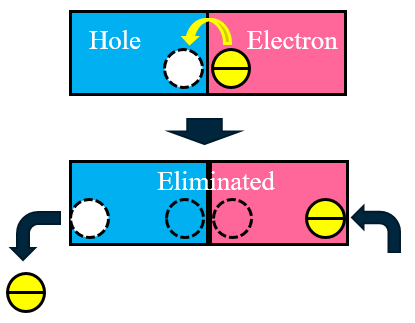
Particles: Acts on quarks and leptons (e.g., electrons, neutrinos)
Effects: Responsible for radioactive decay and the conversion of particles into other particles.
Strong Force:Range: Very short-range force
Particles: Holds quarks together to form protons and neutrons
Effects: Responsible for the stability of atomic nuclei.
These forces are described by different theories: Electromagnetism is described by Maxwell's equations.
Weak Force: Described by the electroweak theory, which unifies the weak force and electromagnetism.
Strong Force: Described by quantum chromodynamics (QCD).
Elementary table of particle
The term "particle" is usually applied differently to three classes of sizes. The term macroscopic particle usually refers to particles much larger than atoms and molecules. These are usually abstracted as point-like particles, even though they have volumes, shapes, structures, etc. Examples of macroscopic particles would include powder, dust, sand, pieces of debris during a car accident, or even objects as big as the stars of a galaxy.
The Standard Model
The Standard Model of particle physics is the theory describing three of the four known fundamental forces (electromagnetic, weak and strong interactions – excluding gravity) in the universe and classifying all known elementary particles. It was developed in stages throughout the latter half of the 20th century, through the work of many scientists worldwide, with the current formulation being finalized in the mid-1970s upon experimental confirmation of the existence of quarks. Since then, proof of the top quark (1995), the tau neutrino (2000), and the Higgs boson (2012) have added further credence to the Standard Model. In addition, the Standard Model has predicted various properties of weak neutral currents and the W and Z bosons with great accuracy.
Elementary particles of the Standard Model
What does the electron look like?
An electron looks like a particle when it interacts with other objects in certain ways (such as in high-speed collisions). When an electron looks more like a particle it has no shape, according to the Standard Model. Electrons don't have physical shapes they act as particle duality refers to their behaviour in different situations, not their physical appearance.
Probability densities for the first few hydrogen atom orbitals, seen in cross-section. The energy level of a bound electron determines the orbital it occupies, and the colour reflects the probability of finding the electron at a given position.
A lightning discharge consists primarily of a flow of electrons.
Maxwell's equations of electromagnetism
Maxwell's equations are a set of four equations that describe the behaviour of electric and magnetic fields and how they relate to each other. Ultimately they demonstrate that electric and magnetic fields are two manifestations of the same phenomenon.
In a vacuum with no charge or current, Maxwell's equations are, in differential form:
∇ · E = 0
∇ · B = 0
∇ x E = -(∂B/∂t)
∇ x B = µ0ε0 (∂E/∂t)
Where E and B are the electric field and magnetic flux density, and ∇· and ∇× are the divergence and curl operators, respectively. The variables µ0 and ε0 are the fundamental universal constants called the permeability of free space and the permittivity of free space, respectively. In a vacuum with no electrical charges present, the mathematical solutions to these differential equations are sinusoidal plane waves, with the electric field and magnetic fields perpendicular to each other and to the direction of travel, having a velocity
where c is recognized as the speed of light.
Maxwell's equations are macroscopic expressions; they apply to the average fields and do not include quantum effects.
Maxwell's Equations: General Form
In their most general form, Maxwell's equations can be written as:
∇ · D = ρ (Gauss' law of electricity)
∇ · B = 0 (Gauss' law of magnetism)
∇ x E = -(∂B/∂t) (Faraday's law of induction)
∇ x H = J + ∂D/∂t (Ampère's law)
In the first equation, ρ is the free electric charge density. In the last equation, J is the free current density.
For linear materials, the relationships between E, D, B, and H are
D = εE
B = µH
Here, ε is the electrical permittivity, and µ is the magnetic permeability. For nonlinear materials, e and µ are dependent on the field strength. In isotropic media, e and µ are independent of position. In nonisotropic media, e and µ can be described as 3×3 matrices that represent the different values of permittivity and permeability along the different spatial axes of the medium. In all media, e and µ also vary with the frequency of the radiation.
To be consistent with Maxwell's equations, the magnitudes of the electric and magnetic field vectors must satisfy the following relationship:
Thus, in electromagnetic radiation, the electric field vector has a much larger amplitude than the magnetic field vector.
Understanding equations as such is irrational to understand the functions of square root.
The square root of a number is the value of power 1/2 of that number. In other words, it is the number whose product by itself gives the original number. It is represented using the symbol '√ '.
How does a diode filter electrons? Analysing this will make a fundamental understanding the behaviour of the electron. This analogy delves an explainable nature principle of an Electron.
Today, most diodes are made of silicon, but other semiconducting materials such as gallium arsenide and germanium are also used.
How do electrons act in Semiconductor materials such as Silicon? As We Already Know Electron Act differently on Types Of Material "Conductivity"
A silicon atom has 14 electrons around the nucleus, and of these, there are 4 valence electrons on the outermost orbital. When this is made into a single crystal, it can be used as a material for semiconductor products.
Forming crystals by bonding silicon atoms in a regular structure
When it crystalizes, the nuclei share electrons and they bond with 8 electrons around each nucleus. Electricity for the most part does not conduct in this pure monocrystalline silicon state. Doping silicon with other impurities changes it so it is conductive. The semiconductor is categorized as a p-type or n-type depending on the type of impurities that are doped. Junctions based on the p-types and n-types are integrated into one chip to use as an electronic component. p-type semiconductor and n-type semiconductor
Some of the silicon atoms are replaced with P (phosphorus).
This electron is “extra” in this structure. This is a free electron. When voltage is applied, it changes to a state where the electron is drawn to the positive (+) and can move freely (current flows).
Some of the silicon atoms are replaced with B (boron).
Here, this state leaves a “vacancy” where there is no electron. This vacancy is called a hole. That is, the hole can also be called a virtual particle because it is void. How current flows in p-type semiconductors
Holes appear to be moving
Movement of electrons and holes in semiconductor
n-type semiconductor
Electrons move toward the plus pole. At this time, the current flows in the opposite direction of the electrons’ movement.
p-type semiconductor
Electrons are what is actually moving, but the holes appear to be moving toward the direction of the minus pole.
As a result, both p-type and n-type semiconductors can have current flow, but they are not as conductive as metal. Therefore, there is no need to use semiconductors if the only purpose is for current flow or conductivity. The advantages or characteristics of a semiconductor are its ability to allow or stop current flow based on certain conditions. The basic principle behind a semiconductor is its rectification behaviour using a p-n junction. When voltage is applied in the forward direction of the p-n junction
When voltage is applied to the p-n junction so that p becomes plus, the holes and the electrons can be moved toward the interface. When holes and electrons meet at the interface (junction), the electrons jump into holes and both are eliminated. After those electrons are eliminated, more electrons flow into the n-layer, and electrons flow out from the p-layer, creating new holes. This is repeated, enabling the current to continue to flow. When voltage is applied in the reverse direction of the p-n junction
Here is the region that does not have any holes and electrons…called the depletion layer
Voltage is applied to the p-n junction so that n becomes plus. Since the holes and electrons move away from one another, they do not meet at the interface and the current cannot flow. A region forms close to the interface called the depletion layer, which does not have any holes and electrons, and this produces voltage-withstanding. As a result, we know that there is rectification behaviour in the p-n junction.
Among the devices that use semiconductors for materials, there are power semiconductors, which are made to handle or process large currents and power. There is no clear line, but power semiconductors are generally categorized as having a rated current of 1A or greater. The following types are common devices.


Comments
Post a Comment